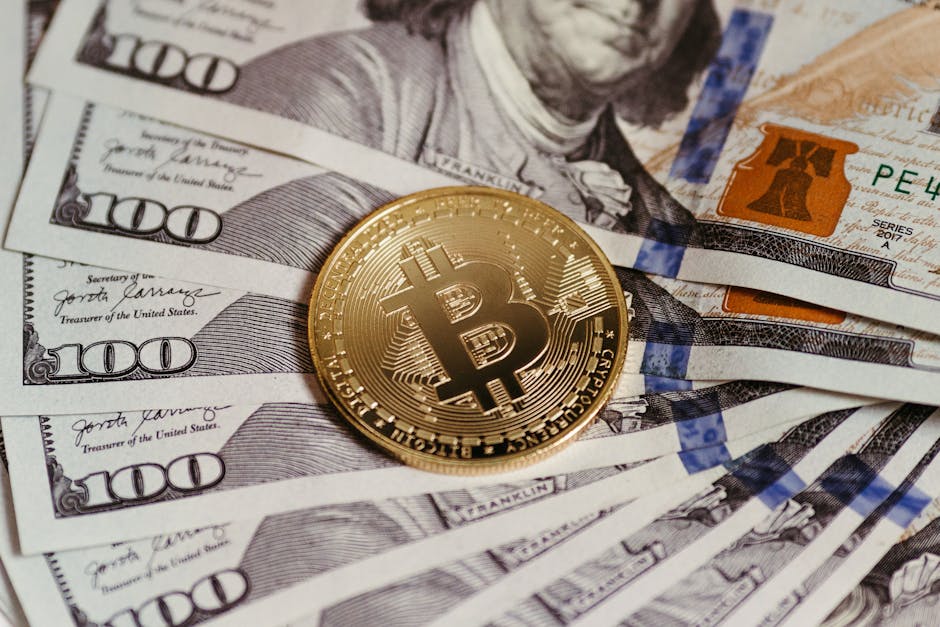
Bitcoin has reclaimed the $80,000 level for the first time since January, triggering a wave of short liquidations and signaling a potential shift in market dynamics.
What to know
- Bitcoin hit $80,500 on May 5, its highest price since late January, before settling near $79,900.
- The rally triggered more than $300 million in liquidations of bearish cryptocurrency bets over the past day.
- A 66-day streak of negative funding rates saw BTC shorts paying a 12% annualized carry, a rare and prolonged pressure point.
- Net realized profits surged to a one-month high of $207 million as holders took profit at the $80,000 level.
- Options desks are bidding on further price jumps, even as the skew still favors downside protection.
- A crypto market analyst noted that Bitcoin has confirmed a key support level for the first time in months, opening the door to extend the April recovery rally.
- The rest of the digital assets followed with their own recovery spikes, echoing the original cryptocurrency's move.
The Break Above $80,000
After months of trading below the psychological $80,000 mark, Bitcoin finally cracked through on May 5, touching an intraday high of $80,500. The last time BTC traded at these levels was the end of January, when a similar recovery rally began to retrace. The climb has been sharp and decisive, but as is often the case with such moves, a small pullback followed — the price now floats around $79,900.
Yet the significance of this level cannot be overstated. For many traders, $80,000 acts as both a resistance and a magnet. Crossing it, even briefly, resets market psychology. The question now is whether the move can be sustained or if it will slip back into the range that has held for months.
Short Squeeze Dynamics
Behind the surge lies a classic liquidation cascade. According to reports, bearish cryptocurrency bets experienced a massive squeeze as Bitcoin suddenly turned upward. Over $300 million in short positions were wiped out, adding fuel to the rally. This type of event is self-reinforcing: as shorts get liquidated, the buying pressure increases, pushing prices higher and forcing more shorts to cover.
The $300 million flush of shorts is the largest single-day unwind of bearish positions in weeks, suggesting that many traders were caught off guard by the rapid move.
This isn't an isolated event. The short squeeze compounds the already strained conditions in the perpetual futures market, where funding rates have been negative for an unusually long stretch.
The 66-Day Funding Anomaly
For 66 consecutive days, Bitcoin perpetual futures have carried a negative funding rate — meaning shorts have been paying longs to keep their positions open. The annualized cost has averaged 12%, a significant carry that reflects persistent bearish sentiment.
What makes this streak notable is its duration and the fact that it hasn't capped BTC's price advance. Typically, negative funding signals excessive shorting, which can lead to a squeeze — exactly what happened. Analysts cited by Decrypt suggest the driver is institutional hedging rather than pure fear: large players are using futures to hedge spot exposure, creating persistent sell pressure on the funding side.
The negative funding streak has lasted 66 days, with shorts paying a 12% annualized carry. That's an expensive bet that just blew up for many.
If the squeeze continues, shorts may be forced to cover at even higher prices, creating a feedback loop. But if institutions are the source, the dynamics could be more structural than speculative.
Profit-Taking and Market Health
A surge to $80,000 inevitably brings profit-taking. On May 5, net realized profits hit a one-month high of $207 million, according to CoinDesk. This is a healthy sign: it shows that long-term holders are taking some chips off the table, but not at panic levels.
The ability of Bitcoin to absorb $207 million in profit-taking without collapsing back below $80,000 is itself bullish. It indicates that buying demand is strong enough to meet selling pressure. If the rally were fragile, such a wave of selling would have driven the price down more sharply.
Net realized profits hit $207 million — a one-month high — yet Bitcoin held near $80,000, suggesting resilient support.
Options Market Signals
The options market is also flashing interesting signals. According to CoinDesk, options desks are bidding on further price jumps even as the skew still favors downside protection. This duality is typical of a market that has been battered by uncertainty but senses a potential breakout.
Traders are hedging both ways: buying puts for protection while simultaneously positioning for upside. The net effect is a market that could snap violently in either direction depending on the next catalyst. For now, the weight of the short squeeze and the negative funding carry seem to be tilting the scales upward.
Broader Market Rally
As is almost always the case, other digital assets followed Bitcoin's lead. Coins like ETH, SOL, and DOGE saw their own recovery spikes, though the data is less detailed for them. The synchronized move suggests that the rally is systemic, not isolated to BTC.
This kind of correlation often reinforces the trend. When altcoins join the recovery, it validates the strength of the move and can attract additional capital from traders tracking relative strength.
Looking Ahead
The reclaim of $80,000 is a significant milestone, but Bitcoin is not out of the woods. Resistance near $81,000 and the $86,000 level (a key exponential moving average) loom overhead. A crypto market analyst has highlighted that BTC needs to reclaim the $86,000 EMA to confirm a full trend reversal.
Funding rates remain a wildcard. If the negative streak continues, it could set up another squeeze. But if shorts capitulate and funding flips positive, the fuel could dissipate. The next few days will be critical: can Bitcoin hold above $80,000 and build a base, or will profit-taking drag it back into the range?
The next key level is $86,000 — a key EMA that would confirm the April recovery rally is still alive. Until then, the market remains in a cautious uptrend.
Investors should watch the funding rate, the open interest in options, and the volume of short liquidations. If the squeeze momentum fades, a retest of lower supports is possible. But for now, Bitcoin is back in the spotlight, and the market is watching closely.