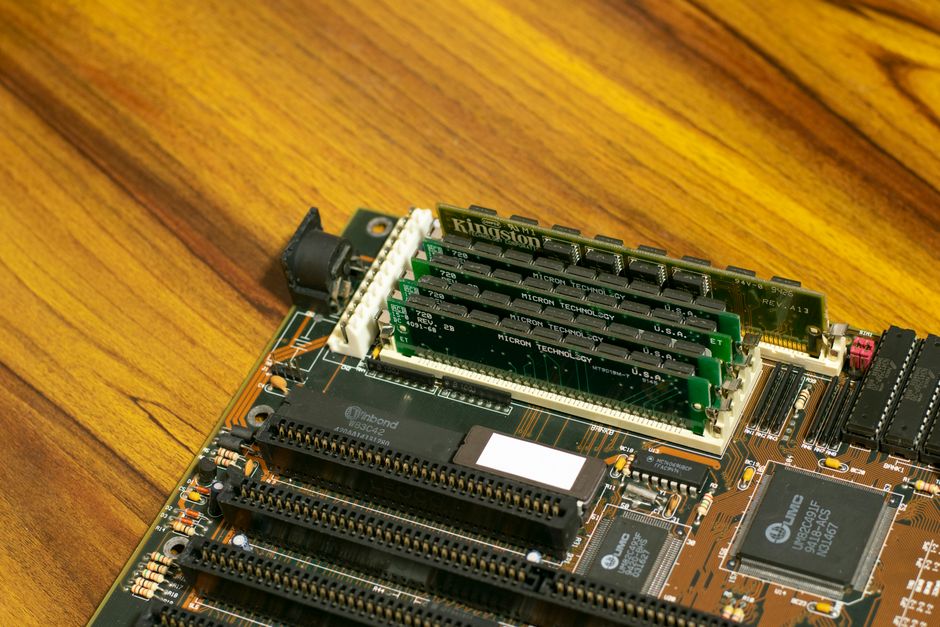
Micron Technology warns that the global memory shortage could stretch past 2027, as AI demand fuels record earnings but also raises the specter of a future oversupply.
What to know
- Micron projects memory chip scarcity lasting beyond 2027, driven by surging AI workloads.
- The company reported record quarterly earnings with revenue soaring 346% year-over-year.
- HSBC raised its price target on Micron shares from $1,100 to $1,700, citing AI-driven demand.
- The prolonged shortage could force innovation in AI efficiency, potentially creating a surplus market after 2028.
- Risks remain: if AI demand plateaus, oversupply could hit the semiconductor sector, which is historically cyclical.
- Crypto Briefing reports that the semiconductor sector's volatility underscores AI infrastructure's critical role.
The AI Demand Boom Reshapes Memory Markets
The memory chip industry is experiencing an unprecedented surge, and at the center of it all is Micron Technology. The company’s latest earnings report revealed a staggering 346% revenue jump, a direct result of insatiable demand from AI data centers. Large language models and generative AI applications require vast amounts of high-bandwidth memory (HBM), and Micron has positioned itself as a key supplier.
This demand has not only boosted Micron’s bottom line but also caught the attention of major financial institutions. HSBC recently lifted its price target on Micron to $1,700 from $1,100, reflecting confidence that AI will continue to drive chip consumption for years to come. The revision is one of the most aggressive on Wall Street and underscores the transformative impact of AI on traditional semiconductor cycles.
However, the good news comes with a caveat. Micron itself projects that the memory shortage could extend beyond 2027. While that sounds bullish for near-term pricing, it also signals that supply constraints are severe enough to last nearly a decade. That kind of extended scarcity has rarely been seen in the memory industry, which has historically swung between boom and bust every few years.
Record Earnings: A Blessing and a Curse
Micron’s record earnings are a clear victory lap for the company, but they also bring forward the perennial question: how long can this last? The semiconductor sector is notorious for cyclical downturns. When demand peaks, manufacturers rush to add capacity, often leading to oversupply and price collapses. With Micron already reporting record numbers, the risk of a future glut is very real.
“Micron’s earnings surge highlights AI’s transformative impact on tech markets, but potential oversupply risks loom if AI demand plateaus.” — Crypto Briefing
The timeline provided by Crypto Briefing shows a rapid succession of events: from HSBC raising its target to Micron projecting shortages past 2027, all within days. This cluster of news suggests that the market is pricing in a lengthened supercycle, but history warns that consensus often peaks near the top.
Micron’s challenge will be to manage its capital expenditure carefully. If the company and its rivals overinvest in new fabrication plants, the post-2028 landscape could shift from scarcity to surplus — exactly as Micron’s own projection hints. The company’s statement about the shortage driving innovation in AI efficiency is a telling sign: they are already thinking about how to survive the eventual normalization.
Innovation in AI Efficiency: The Silver Lining
One of the most intriguing angles from Micron’s latest update is the suggestion that the prolonged memory shortage could catalyze breakthroughs in AI efficiency. When hardware is scarce, software and algorithms tend to innovate. We have seen this before: during the GPU shortage of the early 2020s, companies developed more efficient models and quantization techniques.
If memory remains tight until 2028, AI developers will be forced to optimize their models to use less memory. That could lead to more efficient AI systems that require fewer chips per inference or training run. In turn, this efficiency could eventually reduce overall demand — potentially flipping the market from scarcity to surplus after 2028.
The prolonged memory shortage could drive innovation in AI efficiency, potentially shifting the market from scarcity to surplus post-2028. — Crypto Briefing, citing Micron
This is a double-edged sword for Micron. On one hand, innovation in efficiency means their customers may need fewer chips over time. On the other hand, the total addressable market expands as AI becomes more accessible. The net effect is uncertain, but it underscores that Micron is not just a passive beneficiary of AI — it is actively shaping the ecosystem.
Cyclical Volatility and Strategic Implications
The semiconductor sector’s volatility is well-documented, and Micron’s rapid rise has brought renewed attention to these risks. Crypto Briefing notes that the sector’s cyclical nature can lead to both massive gains and sharp downturns. For Micron, the current tailwind is undeniably strong, but the company must navigate the classic trap of over-earning during a peak.
“Micron’s rapid growth highlights the volatile nature of the tech industry, where cyclical trends can lead to both massive gains and potential downturns.” — Crypto Briefing
For investors, the key metric to watch will be Micron’s capital spending plans. If the company announces aggressive expansion, it could signal that management expects demand to remain elevated for years — but it also raises the risk of oversupply. Conversely, if Micron is cautious, it may leave market share on the table.
Another factor is the broader AI infrastructure buildout. Micron is not the only player; SK Hynix and Samsung are also competing for HBM market share. Any oversupply could be compounded if multiple players ramp up capacity simultaneously. The HSBC target raise is bullish, but it also reflects a consensus that may already be priced in.
Looking Ahead
Micron’s projection of a memory shortage extending beyond 2027 sets the stage for a decade of transformation in the semiconductor industry. The company is reaping the rewards of AI’s insatiable appetite for memory, but it must also prepare for the eventual normalization. The push for AI efficiency could be the key to a soft landing, turning scarcity into surplus in an orderly fashion.
For now, the market remains laser-focused on AI-driven demand. Micron’s record earnings and the HSBC upgrade reinforce the narrative that AI is a once-in-a-generation catalyst. But as history shows, the semiconductor cycle always turns. The question is not if, but when. Investors would be wise to watch for signs of peaking demand and capacity additions that could herald the next downturn.
In the near term, Micron appears well-positioned. The longer-term picture depends on how quickly AI efficiency improves and how the industry manages its expansion. If Micron’s own prediction of a post-2028 surplus comes true, the company that wins the memory wars of 2024–2028 will be the one that navigates the transition best.