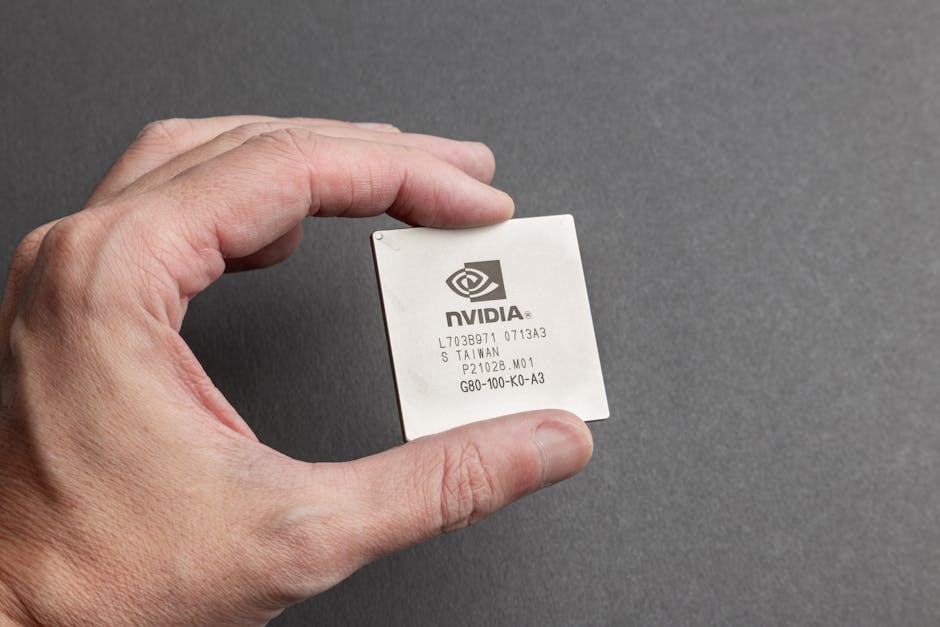
Nvidia just announced another record-breaking quarter, but the fine print tells a more complicated story — one where the AI chip leader is winning the global race but surrendering its position in China to a resurgent Huawei.
What to know
- Nvidia reported another record revenue figure after market close on Wednesday, May 20, 2026, but cautioned that revenue growth would slow in the following quarter.
- The company also announced an $80 billion stock buyback, signaling robust investor confidence and capital returns amid surging AI demand.
- Revenue surged 85% year-over-year, highlighting AI's growing economic impact and Nvidia's near-monopoly on high-end training chips.
- Meanwhile, multiple reports indicate Nvidia is effectively conceding the Chinese AI chip market to Huawei, a direct consequence of U.S. export restrictions that bar the sale of advanced semiconductors to Chinese firms.
- This shift could accelerate China's tech self-sufficiency, as domestic players like Huawei fill the void with their own AI accelerators.
- The dual development — record global revenue but strategic retreat in China — creates a complex picture for investors, supply chains, and geopolitical dynamics.
- Analysts are watching closely to see if Nvidia can maintain its growth trajectory without access to one of the world's largest semiconductor markets.
The Record Quarter: A Victory Lap with a Caveat
Nvidia's latest earnings call was a study in contrasts. The company delivered yet another quarter of staggering growth, with 85% revenue surge pushing figures to new heights. The announcement of an $80 billion buyback sent a clear message: Nvidia’s leadership is confident that the AI boom is far from over, and they are willing to return mountains of cash to shareholders.
Yet beneath the celebratory headlines, the guidance was unusually cautious. Revenue growth is expected to slow in the coming quarter. For a company that has consistently blown past expectations, this forecast signals that even the hottest engine in tech may be facing headwinds — whether from market saturation, geopolitical friction, or the emergence of competitive alternatives.
“The market is now pricing in a softer curve for Nvidia’s trajectory, even as absolute numbers remain breathtaking.”
The buyback itself is a massive vote of confidence, but it also raises questions: is Nvidia signaling that its stock is undervalued, or is it returning capital because internal investment opportunities are shrinking? For now, the market is taking the positive view, but the slowing growth forecast has introduced a note of caution.
The China Conundrum: Export Restrictions Redraw the Map
While Nvidia’s global AI chip business is booming, its position in China is crumbling. U.S. export controls, designed to choke off Beijing’s access to cutting-edge semiconductors, have made it impossible for Nvidia to sell its most advanced chips to Chinese customers. The result, as reported by Crypto Briefing, is that Nvidia is effectively conceding the Chinese AI chip market to Huawei.
Huawei, once known primarily for telecommunications equipment and smartphones, has been building its own AI chip ecosystem — notably the Ascend series. With Nvidia sidelined, Chinese hyperscalers and AI labs have no choice but to turn to domestic alternatives. This shift is not just about market share; it is about accelerating China’s tech self-sufficiency in one of the most strategic industries of the 21st century.
The implications are profound:
- Supply chain disruption: Global AI hardware supply chains were built around Nvidia’s dominance. Now, a bifurcated market is emerging — one for the West and one for China.
- Competitive acceleration: Chinese firms, led by Huawei, will gain real-world deployment experience at scale, closing the gap with Nvidia’s technology over time.
- Geopolitical leverage: A self-sufficient China in AI chips reduces the effectiveness of U.S. export controls as a strategic weapon.
The Great Decoupling: Winners and Losers
The rise of Huawei as an AI chip contender and the retreat of Nvidia from China represent a microcosm of the broader technological decoupling between the world’s two largest economies. For some, this is an opportunity; for others, a threat.
Who benefits?
- Huawei and other Chinese chip designers (e.g., SMIC, Cambricon) will see increased demand and investment.
- Chinese cloud providers like Alibaba Cloud and Tencent Cloud will deepen their reliance on domestic hardware.
- The Chinese government’s push for indigenous innovation gets a major validation.
Who loses?
- Nvidia loses a multi-billion-dollar revenue stream in the world’s largest chip market.
- Western AI companies that relied on Chinese manufacturing or research partnerships may face friction.
- Global investors who bet on a single, unified semiconductor market will need to recalibrate.
“The AI chip market is no longer global; it is becoming two parallel ecosystems divided by borders.”
A Look at the Numbers: Revenue vs. Reach
Let’s put the scale in perspective. Nvidia’s 85% revenue surge and $80 billion buyback are staggering by any measure. The company’s market cap, already in the trillions, continues to reflect the central role of GPU computing in the AI revolution. But growth is slowing, and the China loss could accelerate that trend.
Consider this: If Nvidia had full access to the Chinese market, its growth trajectory might have remained steep. Instead, it is forced to watch from the sidelines as Huawei captures the upswing in Chinese AI adoption. The buyback may be an attempt to prop up the stock in the face of this structural headwind.
Regulatory and Strategic Responses
How will Nvidia respond? The company has options, but no easy ones:
- Lobbying: Push for relaxed export controls, though geopolitical tensions make that unlikely in the near term.
- Product adaptation: Develop less powerful chips that comply with export rules, but such chips may face lower margins and competition from mid-range alternatives.
- Acquisitions: Use its cash pile to buy stakes in Chinese chip startups or alternative technologies.
- Diversify: Double down on non-Chinese markets, including India, Southeast Asia, and Europe, where AI adoption is accelerating.
For its part, Nvidia has not publicly conceded the market, but the pattern is clear. As one analyst put it, “Nvidia is not choosing to leave China; the export restrictions are making it impossible to stay.”
Looking Ahead
The next 12 to 18 months will be decisive. If Nvidia can maintain its technological lead — and if the slowing growth proves temporary — it may weather the China storm without lasting damage. But if Huawei and other Chinese firms continue to close the gap, the loss of China could become a permanent drag on Nvidia’s growth story.
Meanwhile, investors will watch for several signals:
- How quickly does Nvidia’s revenue growth decelerate?
- Will the buyback be executed aggressively, signaling confidence?
- Are there any signs of a policy shift that could reopen the Chinese market?
- How quickly is Huawei scaling its Ascend chip ecosystem?
The outcome will not only determine Nvidia’s future but will also shape the global balance of power in AI for decades. For now, the company is on top, but the tectonic plates are shifting beneath it.