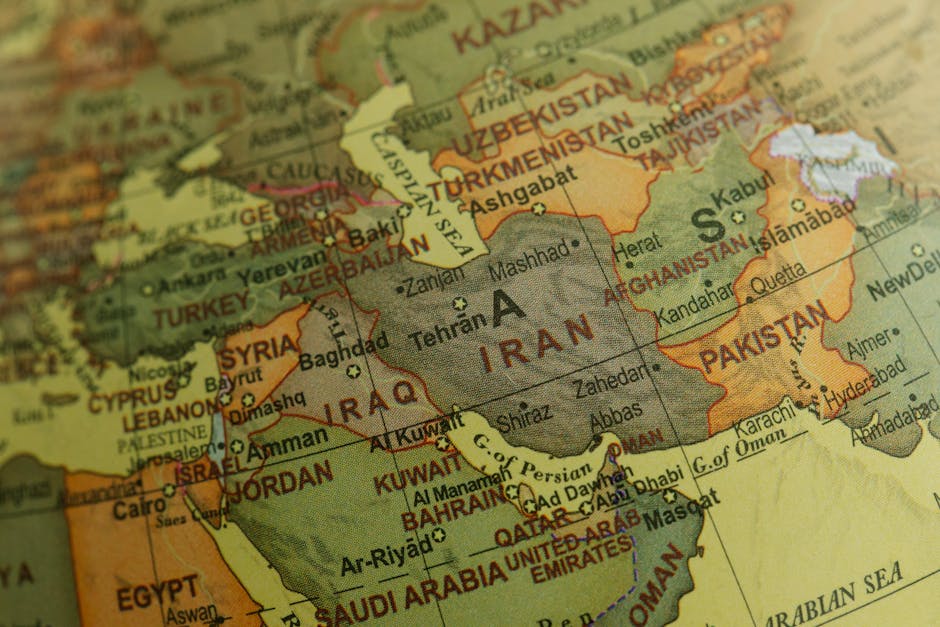
Oil prices surged 2% as a multi-front escalation between Iran, Israel, the US, and Gulf states sent shockwaves through global energy markets. What began as a missile interception near Aqaba has spiraled into a full-blown regional crisis with direct attacks on US targets and drone incursions over Kuwait.
What to know
- Oil prices jumped 2% on July 19 amid a rapid escalation in US-Iran tensions across the Middle East.
- Israel intercepted an Iranian missile near Aqaba and vowed strong retaliation, raising fears of a direct confrontation.
- Iran launched missiles at US targets, marking a significant escalation in the conflict.
- Kuwait's air defenses successfully countered Iranian drone attacks, bringing the crisis directly into the Gulf.
- Yemen's Ansarullah (Houthis) warned of escalating tensions and a potential closure of the Bab el-Mandeb strait, a critical chokepoint for global oil shipments.
- Prediction markets show a 7.6% probability of crude oil reaching a new all-time high by September 30, and 15.5% by December 31.
- The odds of a full airspace closure by August 31 stand at 57%, while the chance of Iranian military action against a Gulf state by July 22 is 54%.
The Escalation in Context
The events of July 19 did not emerge from a vacuum. For weeks, the region has been simmering with proxy strikes, diplomatic breakdowns, and military posturing. But the latest chain reaction began when Israel intercepted an Iranian missile near the Red Sea port of Aqaba. Within hours, Israel's leadership issued a statement vowing "strong retaliation" — a phrase that historically has preceded direct airstrikes or covert operations inside Iranian territory.
Almost simultaneously, Iran launched missiles at US targets in the region. The exact targets remain undisclosed, but the act itself represents a direct military attack on American forces — a red line that has repeatedly defined US foreign policy in the Middle East.
Then came the drones. Kuwait's air defenses engaged and neutralized multiple Iranian drones. For Kuwait, a wealthy Gulf state that has traditionally maintained a cautious neutrality, this marked an unprecedented breach. The attack on Kuwaiti airspace signals that no Gulf country is safe from the widening conflict.
Adding to the turmoil, Yemen's Ansarullah movement — the Houthis — issued a stark warning: tensions could escalate to the point of closing the Bab el-Mandeb strait. That narrow waterway between Yemen and Djibouti is a critical artery for oil tankers heading to the Suez Canal. Its closure would instantly reroute global supply chains and send crude prices skyward.
Oil Markets Under Pressure
The 2% jump in oil prices on July 19 was immediate but measured — a reflection of traders still grappling with the speed of events. Yet the longer-term signals from prediction markets are far more alarming. The probability that crude oil hits a new all-time high by September 30 stands at 7.6%. By December 31, that probability more than doubles to 15.5%.
A new all-time high for crude oil — above the 2008 peak of roughly $147 per barrel — would have cascading effects on inflation, central bank policy, and the global economic outlook. Every dollar rise in oil prices adds billions to fuel costs for consumers and businesses alike.
Traders are now pricing in a risk premium that goes beyond traditional supply-demand dynamics. The US-Iran standoff, when combined with the Houthi threats to Bab el-Mandeb, creates a scenario where supply disruptions could be sudden and severe. Unlike the 2022 Russia-Ukraine shock, where alternatives were available, a Gulf-wide conflict could knock multiple producers offline simultaneously.
Regional Fallout: Kuwait and the Gulf on the Front Line
Kuwait's successful interception of Iranian drones may have averted immediate damage, but the psychological impact is profound. For decades, Kuwait has relied on its alliance with the US to guarantee its security. Now, drones are flying over its capital, and the threat is unmistakably directed from Tehran.
Kuwait's response will be closely watched. Will it call for a Gulf Cooperation Council emergency meeting? Will it request additional US Patriot batteries? The open questions from this trend are precisely centered on how Kuwait navigates the next 48 hours. A forceful military response could widen the conflict; a diplomatic one could be seen as weakness.
Elsewhere in the Gulf, the United Arab Emirates, Saudi Arabia, and Qatar are watching nervously. The Iranian missile attack on US targets suggests Tehran is willing to strike directly at American assets anywhere in the region. No Gulf state can assume it will be spared.
The Houthi dimension adds another layer. Yemen's Ansarullah has both the capability and the stated intent to disrupt shipping through Bab el-Mandeb. A closure, even temporary, would force tankers to take the long route around Africa, adding days to transit times and millions to shipping costs.
Broader Geopolitical Risks: A Multi-Front Crisis
This is no longer a proxy war fought through militias and missile strikes. Iran has now directly attacked US targets. Israel has been attacked and is vowing retaliation. Kuwait is under drone assault. The probability of a full airspace closure by August 31 is at 57% — better than even odds — according to prediction markets. If that materializes, commercial aviation over the Middle East would halt, and military operations would intensify.
The risk of Iranian military action against a Gulf state by July 22 is 54%. That's a 3-day window for an invasion, strike, or sabotage operation. The trigger could be Israel's retaliation, a misstep by a Gulf air defense system, or a deliberate Iranian decision to exploit the chaos.
Israel's vow of retaliation is arguably the most volatile element. Israeli doctrine typically demands disproportionate responses to maintain deterrence. If Israel strikes Iranian nuclear or military sites, Tehran could retaliate by targeting Gulf oil infrastructure — the critical vulnerability of the global economy.
What It Means for Investors
For energy-focused investors, the message is clear: the risk premium embedded in crude oil futures likely needs to increase. The 2% jump may be just the beginning. Prediction markets are already pointing to a non-trivial chance of all-time highs by year-end. For those managing long-only commodity portfolios or energy equities, hedges against further spikes are prudent.
But the uncertainty cuts both ways. A diplomatic breakthrough — however unlikely at this moment — could cause a rapid unwinding of the risk premium. The US has shown willingness to engage Iran in the past, and backchannel talks may already be underway. The 2% spike itself may act as a signal to policymakers that the market is forcing their hand.
Crypto Briefing reported on these developments, noting that the conflict is now directly impacting energy markets. The intersection of geopolitics and commodities is rarely this stark. For traders accustomed to analyzing supply data and refinery margins, the new variable is military escalation — a far less predictable input.
Looking Ahead
The next 72 hours will be decisive. Israel's retaliation, Kuwait's response, and US troop movements will shape whether this spike becomes a trend or an outlier. Prediction markets currently favor further escalation: airspace closure at 57%, Iranian action against a Gulf state at 54%, and oil all-time highs at 7.6% by September 30.
For the Middle East, this is a dangerous return to the brink of a regional war. For global oil markets, the risk profile has shifted dramatically. Investors, policymakers, and citizens alike should watch for the next headline — it may come within hours, not days.