From robotaxi rollouts to privacy crackdowns, four stories converged on June 8, 2026, each carrying implications for how we move, work, and protect our data.
What to know
- Uber customers in the UK can now join an interest list to potentially be matched with a Wayve robotaxi, signaling a major push into autonomous ride-hailing in London.
- Google announced that Gemini 3.5 will become the default model in NotebookLM, its AI-powered note-taking and research tool, promising faster and more capable analysis.
- Apple is tweaking its controversial "glassy" design language after mixed user feedback, while adding a new Siri-in-Camera feature to split bills using Apple Cash.
- A new Massachusetts privacy bill will impose a blanket ban on companies selling people's precise location data, and also prohibit using such data for advertising.
- The bill's passage marks one of the strongest state-level location privacy protections in the US, with potential ripple effects for ad-tech and data brokers.
- Apple VP of Software Sebastien Marineau-Mes demonstrated the bill-splitting feature, which lets users point their iPhone at a receipt, select items, and split the tab.
- The design overhaul, described as "glassy" by some, drew criticism for readability issues, prompting Apple to refine the look.
- Gemini 3.5 in NotebookLM is expected to enhance document summarization and source management, making the tool more central to research workflows.
Apple's 'Glassy' Redesign: A Polarizing Aesthetic
Last year, Apple unveiled a sweeping design language that gave its software and hardware a sleek, transparent appearance — often described as "glassy." The look was intended to convey modernity and depth, but it quickly divided users. While some praised the futuristic shimmer, others found text difficult to read against the translucent layers, especially in apps with dense information.
Now, Apple VP of Software Sebastien Marineau-Mes has confirmed that the company is actively tweaking the design. The goal is to retain the visual identity while improving legibility and contrast. This is a rare admission from Apple that a core design decision needs adjustment after public backlash. The company has historically been confident in its aesthetic choices, so the shift signals that user feedback is being taken seriously.
The updates are expected to roll out in the next major software updates, though exact timing remains unclear. The "glassy" design was initially celebrated for its innovation, but Apple's course correction shows the tightrope between bold design and functional usability.
Splitting the Bill with a Glance: Apple's Siri-in-Camera Feature
Imagine finishing a meal with friends, pointing your iPhone at the receipt, and instantly splitting the tab. That's the promise of Apple's new Siri-in-Camera feature, demonstrated by Marineau-Mes. "If you're grabbing a bite with friends and point your iPhone at the bill, then [you can] select what you ordered to split the tab with Apple Cash," he explained.
The feature leverages on-device intelligence to recognize items on a receipt, let users select their share, and then process payment through Apple Cash. It's a natural extension of Apple's ecosystem play, embedding financial transactions into everyday camera use. The integration with Siri means users can trigger the process with voice commands, making it even more seamless.
This feature could simplify one of life's frequent friction points — splitting a restaurant bill — and further entrench Apple in peer-to-peer payments. It also highlights Apple's focus on practical AI applications that don't rely on cloud processing, aligning with its privacy-first messaging.
Google Pushes Gemini 3.5 into NotebookLM
Google is making Gemini 3.5 the default model in NotebookLM, its AI-powered research assistant. The upgrade brings faster inference, better reasoning, and improved handling of long documents. Users of NotebookLM will now get access to Gemini 3.5's capabilities without needing to toggle settings.
NotebookLM has carved a niche as a tool for students, researchers, and professionals who need to synthesize information from multiple sources. By making Gemini 3.5 the default, Google is betting that the model's enhanced performance will drive adoption and retention. The model can now build source repositories from chat interactions, a feature that streamlines the research process.
The move is part of Google's broader strategy to embed its most advanced AI across its product suite. Gemini 3.5 represents a significant step up from earlier versions, and making it the default in NotebookLM signals Google's confidence in its reliability and safety. For users, the update promises quicker summaries, more accurate citation suggestions, and a smoother overall experience.
Uber and Wayve: A Robotaxi Interest List in the UK
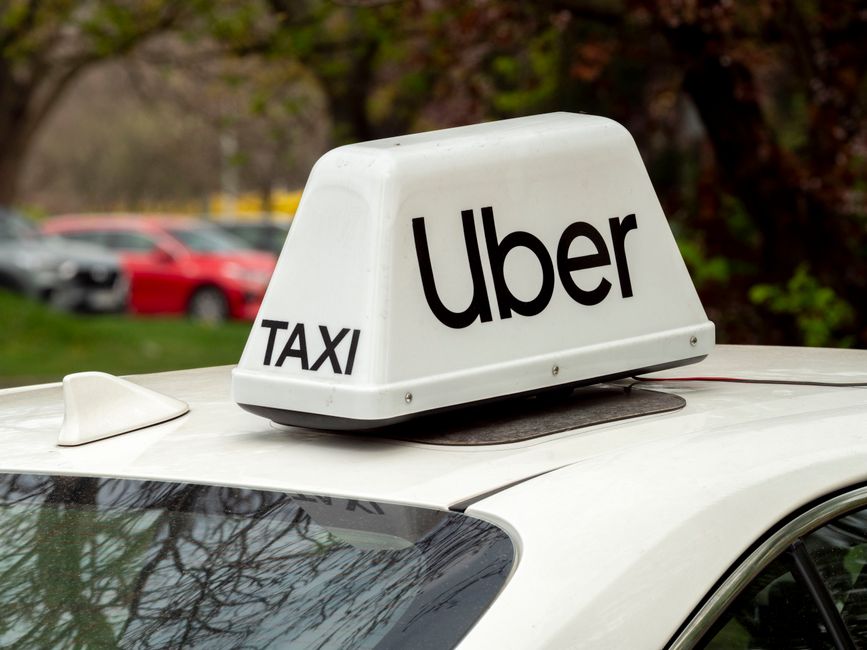
Uber is taking a major step toward autonomous ride-hailing in the UK by opening an interest list for Wayve robotaxis. Customers in the UK can now register their intent to be matched with a Wayve-powered vehicle, laying the groundwork for a commercial rollout. Wayve, a British autonomous driving startup, has been testing its AI-driven system in London and other cities.
The interest list allows Uber to gauge demand and prepare its platform for integration. Wayve's approach differs from some competitors by relying on end-to-end machine learning rather than traditional sensor fusion, which could give it an edge in complex urban environments. Uber has been aggressive in pursuing autonomous partnerships, and the Wayve deal signals its intent to compete with Waymo and others in the robotaxi space.
London is a particularly challenging market due to dense traffic, narrow streets, and unpredictable weather. If Wayve's technology can succeed there, it would be a powerful validation. For now, joining the interest list is the only step for early adopters — a sign that Uber wants to build momentum before a full launch.
Massachusetts Bans Location Data Sales
Massachusetts has passed a sweeping privacy bill that will prohibit the sale of precise location data. The law applies to companies and startups, banning them from selling consumers' precise location information and from using it for advertising purposes. This is one of the strictest state-level measures in the US, targeting the backbone of the mobile ad ecosystem.
The bill's broad language covers any entity that collects location data, with exemptions for emergency services and law enforcement under specific circumstances. Violations could result in significant fines. Consumer advocates hailed the move as a crucial step in protecting privacy, while industry groups warned it could disrupt location-based services and targeted advertising.
The Massachusetts law may inspire similar legislation in other states, especially as public concern over data tracking grows. It specifically targets "precise location data," defined as information that identifies a device's location within a certain radius — likely a few hundred feet. This excludes general location like city-level data, but still impacts apps that rely on granular tracking.
Looking Ahead
Today's announcements span design, AI, transportation, and privacy — four pillars of the modern tech landscape. Apple is listening to users and refining its aesthetic, Google is deepening AI integration, Uber is marching toward autonomy, and Massachusetts is setting new privacy benchmarks. Underlying all of them is a tension between innovation and control: how far should companies push design? How much AI should be default? When does convenience cross into surveillance?
The responses to these questions — from corporate boardrooms and state legislatures alike — will shape the next phase of technology adoption. For consumers, the near future promises more intuitive tools, smarter assistants, and new ways to move — tempered by stronger safeguards over personal data. How these forces interact will define the decade ahead.