The Middle East is on a knife's edge after a dramatic escalation between the US and Iran, with airstrikes hitting a missile site in Tabriz and IRGC-launched missiles slamming into a US air base in Jordan. Markets are already repricing risk, and crypto is no exception.
What to know
- 💥 US airstrikes reportedly hit a missile site in Tabriz, Iran, on July 20, 2026.
- 🚀 The IRGC claims missile strikes on the US al-Azraq Air Base in Jordan.
- ✈️ Iran also struck US aircraft at Jordan's Aqaba airport with ballistic missiles.
- 🔁 The US has conducted airstrikes against Iran for eight consecutive nights.
- ⚛️ Earlier strikes hit an Iranian nuclear site and other military targets.
- 📊 Prediction markets show a 10.5% chance of the Iranian regime falling by end of 2026.
- 📉 Crypto markets are signaling elevated geopolitical risk pricing.
- 🌍 Key actors: IRGC, US, Iran, Jordan, Gulf states, and broader Middle East.
The Escalation in Plain Sight
What began as a series of US strikes on Iranian military targets has rapidly spiraled into a direct exchange of fire on Jordanian soil. The timeline of events, as reported by Crypto Briefing, paints a picture of escalating retaliation:
First, US airstrikes hit Iranian military targets and a nuclear site. Then, the US struck Iran for an eighth consecutive night, this time in response to an attack on a base in Jordan. Soon after, US airstrikes reportedly targeted a missile site in Tabriz, a city in northwestern Iran.
Iran responded directly: ballistic missiles struck US aircraft at Jordan's Aqaba airport. Finally, the IRGC claimed missile strikes on the US al-Azraq Air Base in Jordan.
This is no longer a shadow war. Ballistic missiles have been used on the soil of a key US ally — Jordan — and the IRGC is openly claiming responsibility.
Why Tabriz and al-Azraq Matter
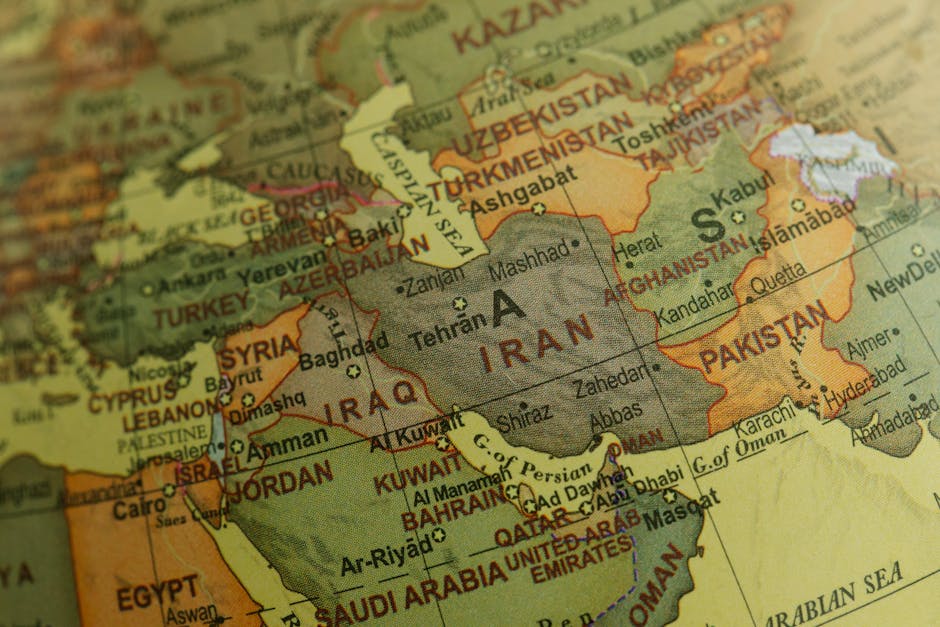
Tabriz is strategically located near the borders of Turkey and Azerbaijan, making it a critical node for Iranian missile infrastructure. Hitting a missile site there sends a signal that the US is willing to take the fight deep into Iranian territory, not just along the Gulf.
Al-Azraq Air Base in Jordan is a major hub for US operations in the region, including drone flights and logistics. A direct strike on this base — claimed by the IRGC — marks a significant breach of what was once considered a safe rear area.
The choice of Jordan as a battleground is also notable. The kingdom has long been a relative oasis of stability and a close US partner. Its involvement now makes the conflict a multi-front crisis, drawing in the Levant alongside the Gulf.
The Nuclear Dimension
Among the targets in earlier US airstrikes was an Iranian nuclear site. While no specifics on damage or contamination have emerged, the targeting of nuclear facilities crosses a red line. It signals that the US is willing to degrade Iran's nuclear capabilities directly, not just its conventional military assets.
This raises the stakes enormously. Any escalation near nuclear sites risks not only radiological release but also a potential shift in Iran's doctrine — possibly pushing toward a faster breakout capability or asymmetric retaliation.
Markets Repricing Geopolitical Risk
The reaction in traditional and crypto markets has been immediate, though data is still flowing. According to prediction markets, the probability of the Iranian regime falling by the end of 2026 is priced at 10.5% YES. This number, while not a forecast, reflects a sudden jump in perceived political instability.
10.5% — that's the market-implied chance that the Islamic Republic collapses within five months. That number is likely to move higher if strikes continue.
For crypto markets, the implications are complex. Historically, Middle Eastern conflicts have led to a mixed reaction: initial risk-off selling, followed by a bid for decentralized assets perceived as safe havens. Bitcoin and other digital assets have been touted as hedges against geopolitical turmoil, but recent shocks have often triggered correlated sell-offs alongside equities.
The Crypto Briefing report specifically frames the escalation in the context of "geopolitical risk pricing" for crypto. This suggests traders are already adjusting positions, capital flowing into stablecoins or out of exchanges, and volatility indicators spiking.
Regional Domino Effects
Iran's strike on Jordan is more than a military incident — it is a political and diplomatic earthquake. Jordan may now feel compelled to respond directly or request deeper US involvement. The Gulf states, already wary of Iran's ballistic missile program, will be watching nervously.
Meanwhile, the IRGC's public claim of responsibility indicates a willingness to escalate further. The group is not just a military force but a political and economic powerhouse within Iran. Its direct engagement could shift the internal balance of power in Tehran.
The repeated US airstrikes — now eight nights running — suggest a sustained campaign, not a one-off retaliation. If this pattern continues, the region could see a broadening of the conflict into a full-scale aerial war, with potential for ground incursions or naval clashes in the Gulf.
The Information War
Sources for this unfolding story are limited. Crypto Briefing is the primary outlet cited, aggregating reports from CNN Money and others. The absence of official confirmations from either the US or Iran creates an information vacuum that could be filled with propaganda and misinformation.
In such a high-stakes environment, every report must be treated with caution. Claims of strikes and counter-strikes may be inflated for psychological effect.
The IRGC's claim, for instance, may be an attempt to project strength domestically, while US silence could indicate operational security or diplomatic calibration.
What to Watch Next
Several indicators will tell us where this is heading:
- 🛡️ US reaction: Will Washington confirm the strikes on Tabriz and al-Azraq? Will it authorize strikes on IRGC leadership?
- 🇯🇴 Jordanian response: Will Amman invoke its defense treaty with the US? Will it close airspace to Iranian flights?
- 🇮🇷 Iranian decision: Will the regime in Tehran continue symmetric strikes, or revert to proxy warfare through the IRGC's network in Iraq, Syria, and Lebanon?
- 📈 Market signals: Watch the 10.5% probability number — if it rises above 20%, that suggests a regime change scenario is being seriously priced. Also monitor crypto volatility indices and stablecoin flows.
- 🤝 Diplomatic windows: Any sign of backchannel talks — perhaps through Oman or Qatar — would be a signal of de-escalation.
Looking Ahead
The current trajectory points toward deeper entanglement. The US appears committed to degrading Iran's military and nuclear capabilities, while the IRGC is responding with direct, cross-border strikes on American assets. Jordan, Iraq, and the Gulf are now in the blast radius.
For crypto markets, this is a defining test of the narrative that digital assets are geopolitical hedges. If they hold value or rally during the next wave of escalation, the case for crypto as a risk-off asset will strengthen. If they sell off, the correlation with traditional risk assets will deepen.
The 10.5% regime change probability may seem small, but in prediction markets, such numbers move quickly when real missiles fly. Whether that number reaches 50% or drops to zero depends on decisions made in Washington, Tehran, and Amman in the coming hours and days.
One thing is certain: the Middle East is ablaze once again, and the fallout — economic, diplomatic, and human — will be felt worldwide.