A wave of developments—from a deadly strike in Sumy to allied adoption of battlefield-tested AI drones—points to a war that is evolving both on the ground and in military strategy.
What to know
- A Russian aerial bomb killed five people in Sumy, highlighting ongoing instability in northeastern Ukraine.
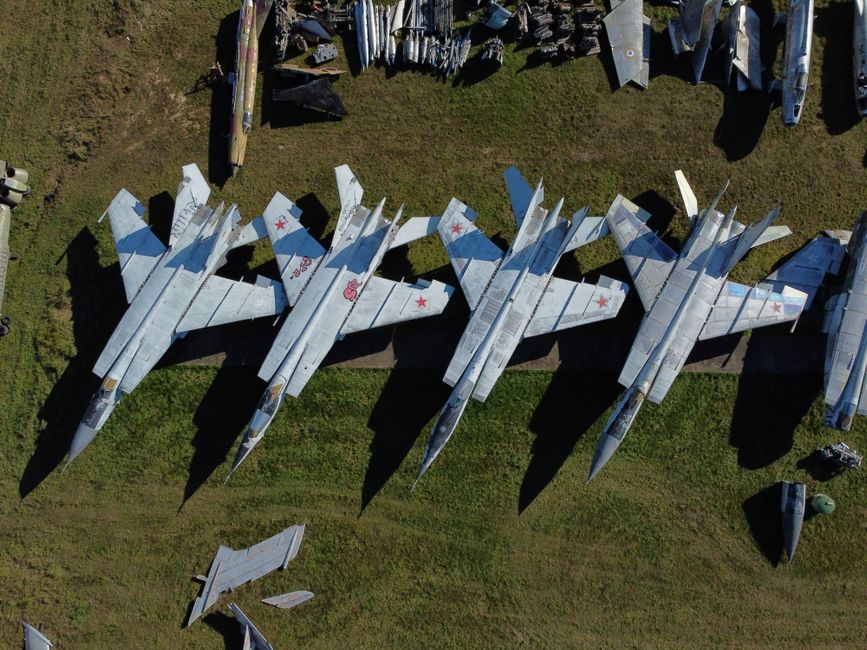
- Poland offered to modernize Ukraine’s MiG-29 fleet but is seeking external funding, a move that underscores a shift toward conditional aid and reciprocal defense ties.
- The Australian Army has begun testing the Vector AI drone, a system refined through Ukrainian combat experience.
- The U.S. Army is also testing the Vector AI drone, signaling allied appetite for proven, off-the-shelf military technology.
- Ukraine’s unmanned systems struck 90 Russian vessels in the Sea of Azov over the course of a week, disrupting Russian logistics.
- By the 1,600th day of conflict, an estimated 230,000 Russian soldiers had been reported dead, raising questions about Russia’s military sustainability.
- Poland’s conditional approach to defense cooperation is being watched as a potential model for future alliances.
The Sumy Attack: A Grim Reminder
On a day that otherwise saw strategic announcements, the human cost of the war was driven home in Sumy. A bomb, part of Russia’s relentless aerial campaign, struck the city, killing five civilians. The attack underscores that despite military gains on both sides, the front lines remain porous and civilian areas continue to bear the brunt of the fighting.
Five dead in Sumy is not a headline that shifts the global narrative overnight, but it is a stark reminder that regional instability is a constant drag on Ukraine’s strategic goals.
The Sumy region has been a repeated target of Russian aerial bombardment. The latest strike will inevitably fuel demands for more effective air defense systems and stronger international support. It also adds to the psychological toll on a population that has endured nearly 1,600 days of war.
Poland’s Conditional Offer: Reshaping Alliances
Poland has long been one of Ukraine’s strongest supporters, but its latest proposal introduces a new dynamic: conditionality. Warsaw has offered to modernize Ukraine’s aging MiG-29 fighter jets, but only if external funding is secured. This approach—aid tied to cost-sharing—could reshape how military assistance flows into the conflict.
For Ukraine, the deal is a double-edged sword. On one hand, upgrading its air force with Western-compatible systems is critical. On the other, it signals that even close allies are moving toward a more transactional relationship, demanding that Kyiv and its backers prove ongoing commitment and financial burden-sharing.
The move is being interpreted as a test case. If Poland’s model succeeds, other nations may adopt similar “co-investment” frameworks for defense aid, potentially slowing the speed of support but also ensuring more sustainable, long-term commitments.
AI Drones: From the Battlefield to Allied Armies
Perhaps the most significant strategic signal this week comes from the rapid adoption of Ukraine-refined drones by allied militaries. The Australian Army has begun testing the Vector AI drone—a system that was developed and iterated on the Ukrainian front lines. The U.S. Army is also evaluating the same platform.
Battlefield-proven technology is now being fast-tracked into allied arsenals, compressing the traditional years-long procurement cycle into months.
The Vector drone represents a new class of combat AI: small, autonomous, and adaptable. Ukrainian operators have used similar systems for reconnaissance, artillery spotting, and even strike missions against Russian armor and logistics. The combat feedback loop has allowed engineers to harden the software against electronic warfare, improve battery life, and refine targeting algorithms in real-world conditions.
For Australia and the United States, testing these drones means they can bypass years of laboratory development. They are effectively importing combat survivability and tactical lessons into their own forces. This trend—allies adopting Ukraine-tested kit—could accelerate the global diffusion of military AI faster than any peacetime program.
Why Vector Matters
The Vector AI drone is not a futuristic concept; it is already a killing machine. Its adoption by two major Western militaries signals a recognition that the war in Ukraine has become a live laboratory for unmanned systems. The lessons learned in the skies over the Donbas and the Black Sea are now informing doctrine from Canberra to Fort Bragg.
Russia’s Mounting Losses and Ukraine’s Naval Wins
While allies look to the future, the current battlefield picture remains brutal. By the 1,600th day of the conflict, an estimated 230,000 Russian soldiers have been reported dead. This staggering figure—whether exact or approximate—points to a level of attrition that challenges Russia’s ability to sustain offensive operations indefinitely.
Ukraine has also achieved notable successes at sea. Over a single week, its unmanned systems struck 90 Russian vessels in the Sea of Azov, disrupting supply lines and threatening Russia’s hold on occupied ports. The strike campaign is part of a broader Ukrainian effort to use low-cost drones to neutralize Russia’s conventional naval advantage.
Ukraine’s drone campaign in the Sea of Azov demonstrates that asymmetric technology can challenge even a traditional maritime power.
The combination of heavy land casualties and naval harassment may be creating fractures in Russia’s military sustainability, though the Kremlin has shown no sign of scaling back its strategic objectives.
Strategic Implications for the War
Taken together, this week’s developments paint a picture of a conflict that is entering a new, more technologically intensive phase. The attack in Sumy shows that the war remains a grinding, regional disaster. But the moves by Poland, Australia, and the U.S. indicate that external powers are increasingly looking to extract and deploy battlefield innovations from Ukraine.
This creates a feedback loop: the longer the war goes on, the more combat-proven technology becomes available, and the more attractive it becomes for allies to adopt it. That, in turn, may influence the war itself—if Ukraine’s partners field drone systems derived from its own experience, they may be more willing to share real-time intelligence, logistics, or even direct support.
The war in Ukraine is no longer just a regional conflict; it is a global test bed for next-generation warfare.
Looking Ahead
The coming weeks will likely bring more of these dual-track developments: continued bloodshed on the ground, and accelerated allied integration of Ukrainian battlefield lessons. Poland’s conditional MiG-29 deal may be a harbinger of how future defense aid is structured. The Vector drone tests by Australia and the U.S. could lead to broader procurement programs, potentially reshaping drone production lines worldwide.
For Ukraine, the key challenge is to keep its own forces supplied while also feeding the innovation pipeline that allies are now tapping. The risk is that the fight for resources becomes a zero-sum game. But if managed well, the country could emerge not just as a bulwark against Russian aggression, but as the world’s most credible source of combat-validated military technology.
The situation in Sumy serves as a caution: no amount of strategic progress can erase the immediate human cost. As the war grinds past 1,600 days, the balance between innovation and survival remains delicate.