The unthinkable has become reality: a direct military exchange between Iran and the United States on multiple fronts, with immediate spillover into global financial markets, including an unprecedented $350 million wipeout in cryptocurrency positions.
What to know
- Iran launched coordinated missile and drone attacks against 11 US military bases in Bahrain, Kuwait, and Jordan.
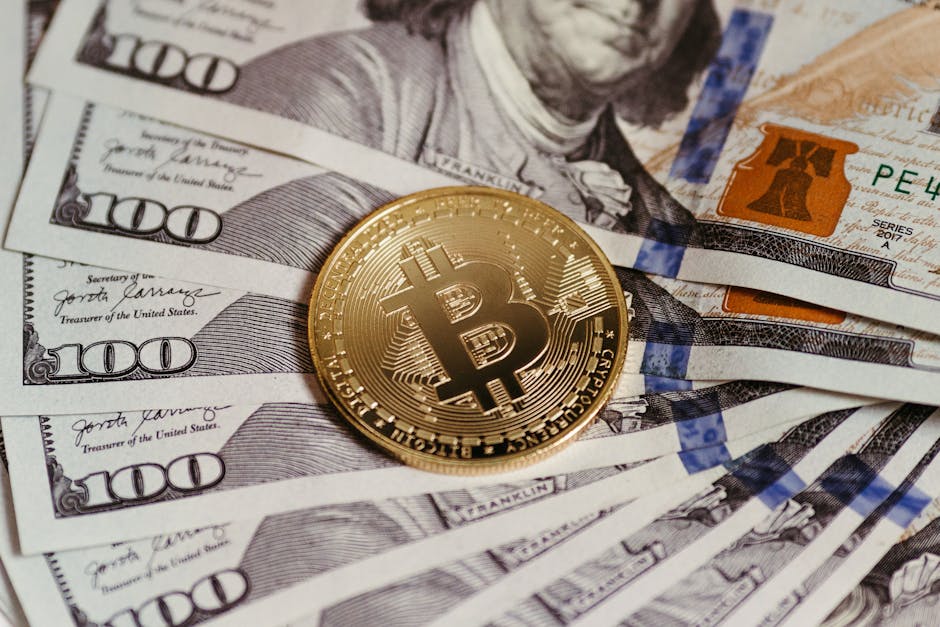
- The assault triggered $350 million in crypto derivatives liquidations, predominantly hitting long positions, and sent Bitcoin down roughly 2%.
- The United States conducted its 10th consecutive night of strikes against Iran as part of the ongoing Hormuz conflict.
- Kuwait officially responded to the Iranian drone and missile attacks, escalating the regional confrontation.
- Jordan closed its airspace following the strikes, disrupting regional aviation and trade routes.
- The attacks mark a dangerous new phase in the Iran-US standoff, shifting from proxy actions to direct military engagement.
- Prediction markets now price a 62.5% chance of Iranian military action against a Gulf state occurring on July 22.
- Crypto markets, already sensitive to geopolitical risk, saw cascading liquidations as leverage unwound across exchanges.
The Escalation in the Gulf
The Gulf region awoke to a new reality on July 21, 2026, as Iran launched a multi-axis offensive against American military installations. Targeting 11 bases spread across three nations—Bahrain, Kuwait, and Jordan—the operation combined ballistic missiles and explosive-laden drones. This was not a symbolic strike; it was a calculated, large-scale assault designed to test US air defenses and political resolve.
The attacks shattered the fragile status quo that had held since the earlier rounds of strikes. For ten consecutive nights, the US had been pounding Iranian positions in the Hormuz region, trying to degrade Tehran's strike capability. The Iranian countermove was swift and comprehensive. Within hours, Kuwait announced it had activated its own defenses and fired back at incoming threats. The nature of that response remains classified, but it signals a full Kuwaiti entry into the conflict.
In a single day, the conflict migrated from the Strait of Hormuz to the heart of the Arabian Peninsula. The US bases struck are not peripheral—they are central to power projection in the Gulf.
Jordan, long a cautious player, took the dramatic step of closing its entire airspace. Commercial flights were diverted or grounded, and the country's air defense forces went on high alert. The move, while defensive, underscores how the shockwaves from the Iran-US confrontation are already redrawing regional security maps.
Crypto Markets Under Fire
While the physical damage was still being assessed, a parallel crisis unfolded in digital asset markets. The cascade of liquidations—$350 million in total—was among the largest single-event flush since the early 2022 deleveraging cycles. Bitcoin fell approximately 2% in the minutes following news of the strikes, and altcoins suffered heavier losses.
The trigger mechanism is now well understood: sudden geopolitical shock → panic sell orders → cascading liquidations on leveraged exchanges. But the scale here is notable. The $350 million figure points to a highly levered market caught off guard by the rapid escalation of the Hormuz conflict.
The crypto market absorbed a $350 million systemic shock in minutes—a reminder that digital assets are not immune to geopolitical gravity.
Crypto Briefing, the outlet that broke the story, noted that the sell-off was compounded by the closure of Jordan's airspace, which disrupted internet connectivity routes used by some regional miners and traders. The intersection of kinetic warfare and digital finance has rarely been this direct.
Regional Fallout: Who Gets Dragged In?
The strikes on Bahrain, Kuwait, and Jordan transform what was a US-Iran standoff into a broader Gulf crisis. Kuwait's response is critical—it is the first Gulf state to fire back directly. Bahrain, home to the US Fifth Fleet, is now a live theater. And Jordan, while not a Gulf state, provides a land corridor that, if severed, could affect energy and cargo flows from the Red Sea to the Mediterranean.
Prediction markets had already priced a 62.5% probability that Iran would target a Gulf state by July 22. That bet now appears prescient. The remaining 5% thresholds mentioned in the data suggest that traders are now watching for follow-on actions—perhaps an Iranian response to Kuwait's retaliation, or a US decision to expand the air campaign.
Iran has signaled that its missile and drone capabilities are not exhausted. The US has demonstrated an appetite for sustained strikes. The region is locked in a cycle that will be difficult to break without a third-party intervention.
The Human and Strategic Cost
Though the immediate focus is on financial markets, the human toll is mounting. Eleven bases means thousands of American and allied personnel are now under direct threat. Casualty figures were not provided in the initial reports, but the scale of the attack suggests that any prolonged conflict will exact a heavy price.
Strategic analysts are already pointing to the Hormuz choke point. The US 10th night of strikes was aimed at neutralizing Iranian anti-ship missiles—a necessary precondition for keeping the strait open. If Iran can disrupt shipping through Hormuz, the global energy supply would face a shock that would dwarf any crypto market movement.
The stakes go far beyond digital wallets. A sustained conflict in the Gulf could cut off 20% of the world's oil supply—and that would reshape every market, including crypto.
Looking Ahead
The next 48 hours will determine whether this is a spike or a sustained war. Kuwait's next move, Jordan's airspace reopening, and the US military's assessment of damage to its bases will all be watched closely. Prediction markets give a 61.5% chance of further Iranian action, suggesting the market expects more volatility.
For crypto holders, the lesson is clear: geopolitical risk is not an abstract variable. It can cascade into leverage events that vaporize billions in minutes. Risk management—reducing leverage, diversifying into stable assets, maintaining liquidity—will be the defining strategy until the Hormuz situation stabilizes.
The world is now watching the Gulf with an intensity not seen since the tanker wars of the 1980s. The intersection of missiles and mining rigs has never been more volatile.
This article is based on reports from Crypto Briefing and other sources as of July 21, 2026.