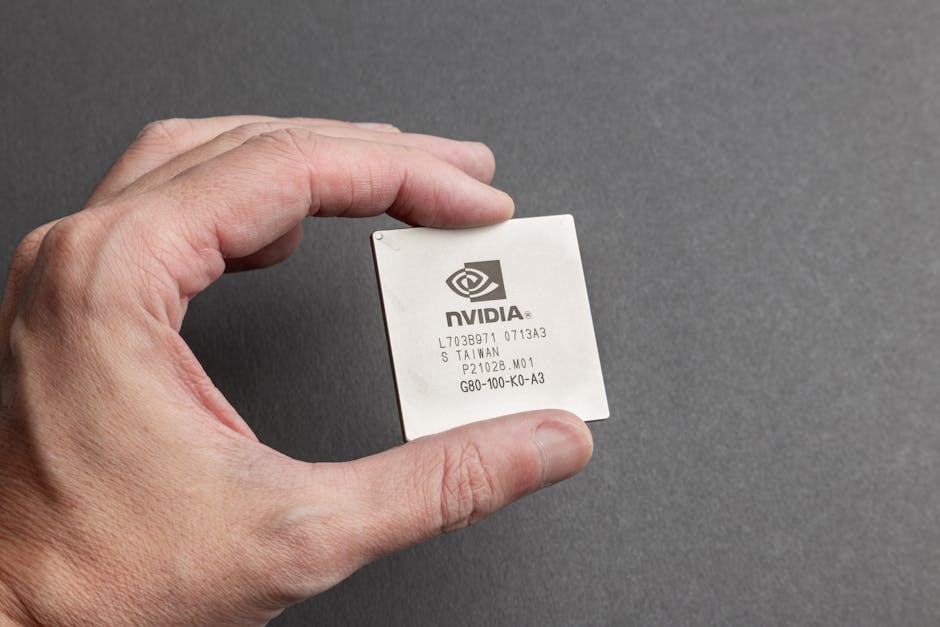
Nvidia's planned $20 billion bond sale marks a pivotal moment in the AI investment race, as the chip giant turns to debt to fuel what may be the most capital-intensive expansion in tech history.
What to know
- Nvidia is planning a $20 billion US bond issuance to fund AI chip production.
- The deal is expected to be completed by the end of the month, according to a source close to the company.
- Nvidia has not commented on the deal, which remains in early negotiation stages.
- The bond sale reflects a strategic shift toward leveraging debt to finance growth in the AI infrastructure space.
- Analysts view this as one of the largest single corporate bond moves in the technology sector.
- The timing coincides with an escalating global race among tech giants to build out AI compute capacity.
The $20B Bet: Breaking Down the Numbers
When Nvidia announces a $20 billion bond issuance, the figure alone demands attention. It is a bet that dwarfs most corporate debt offerings, especially from a company that has long been cash-rich and debt-averse. The proceeds are explicitly earmarked for AI chip production, the very engine driving the company's meteoric rise.
The $20B number is not arbitrary. It reflects the staggering capital requirements of building and operating cutting-edge fabrication facilities, securing advanced packaging capacity, and scaling supply chains to meet explosive demand for AI accelerators.
By turning to the bond market, Nvidia is signaling that internal cash flow—while enormous—may not be sufficient to capture the full opportunity window. This is a company that reported over $30 billion in free cash flow in recent quarters, yet it still chooses to issue debt. The message is clear: the AI opportunity is so large that it justifies taking on leverage.
Why Debt? A Strategic Pivot
The decision to issue bonds rather than tap cash reserves or equity markets represents a deliberate strategic shift. Nvidia is leveraging its stellar credit rating—still among the highest in tech—to lock in cheap financing before rates potentially rise further.
Bond markets offer a predictable cost of capital, and for a company with Nvidia's cash generation profile, debt service is a manageable burden. This approach allows the company to preserve cash for other priorities, such as acquisitions, stock buybacks, or R&D hires. It also diversifies its funding sources, a prudent move given the cyclical nature of semiconductor demand.
The move mirrors a broader trend among tech giants: using debt as a tool to accelerate capital-intensive projects without diluting equity or slowing down innovation.
The AI Infrastructure Race Heats Up
Nvidia is not alone in this borrowing spree. The AI infrastructure race has triggered a wave of corporate debt issuance across the tech sector, as companies race to build data centers, purchase GPUs, and secure energy supplies. Nvidia's $20B bond deal is both a response to and a driver of this frenzy.
The company's chips are at the center of the AI boom, powering everything from large language models to autonomous vehicles. To maintain its leadership, Nvidia must not only design next-generation processors but also ensure it can manufacture them at scale. The bond proceeds will likely fund expansions at Nvidia's fabrication partners, advanced packaging facilities, and perhaps even direct investment in supply chain infrastructure.
The escalation is visible in every major tech earnings call: executives are raising capital expenditure guidance with each passing quarter. Nvidia's $20B debt move is the most concrete signal yet that the AI infrastructure buildout is entering a new, more expensive phase.
Market Signals and Investor Sentiment
Investors have generally reacted positively to the news, viewing Nvidia's willingness to issue debt as a vote of confidence in its own growth trajectory. The bond market is expected to absorb the offering with strong demand, given Nvidia's investment-grade rating and the strategic purpose of the funds.
That said, the deal has not yet been finalized. The company has not commented publicly, and negotiations are in early stages. Any changes in terms or delays could shift sentiment. Crypto Briefing, which originally broke the story, highlighted that the source close to the company expects closure by month-end.
The lack of official comment leaves some uncertainty, but the size and structure of the deal suggest Nvidia is moving with confidence.
Risks and Scenarios
While the bond issuance is a bold move, it carries inherent risks. If AI demand growth slows—due to regulatory hurdles, technology shifts, or economic downturns—Nvidia could find itself with a large debt load and excess capacity. The semiconductor industry is notoriously cyclical, and the current boom may not last forever.
Furthermore, the bond market itself could turn if interest rates climb or credit conditions tighten. Nvidia is issuing US dollar-denominated bonds, so any weakness in the US economy could affect investor appetite.
Another risk is execution. Building chip production capacity is complex and involves long lead times. If Nvidia's plans are delayed or fail to meet performance targets, the debt financing will still need to be serviced.
The scenario to watch: a moderation in AI hype could leave Nvidia with both debt and capacity, pressuring margins.
Looking Ahead
The $20 billion bond issuance is more than just a financing event. It is a declaration that Nvidia intends to remain the dominant force in AI hardware through aggressive investment, even if that means taking on leverage. The deal's completion by month-end will be a key milestone, providing a clearer picture of how the company plans to deploy the capital.
Long-term, this move could set a precedent for how tech companies fund large-scale infrastructure projects. As the AI revolution requires ever-larger sums of capital, debt may become the preferred tool for growth. For Nvidia, the bet is that the next decade of AI will reward the boldest spenders.
All eyes are on the closing of this deal—and on Nvidia's next move in the high-stakes game of AI dominance.