The South Korean chipmaker’s historic $28 billion IPO on the NASDAQ is not just a corporate milestone—it’s a signal that the center of gravity in tech investment is shifting from digital currencies to the physical infrastructure powering artificial intelligence.
What to know
- SK Hynix priced its American Depositary Receipts (ADRs) at $149 each, raising $28 billion in the largest foreign offering ever seen on US exchanges.
- Investor demand hit an extraordinary $200 billion, demonstrating an insatiable appetite for exposure to AI-related semiconductor plays.
- The listing is designed to bridge valuation gaps between Korea’s KOSPI and the NASDAQ, giving SK Hynix a more direct route to global capital.
- Bain Capital’s recent exit from its stake underscores the lucrative returns now available in AI-driven memory and storage markets.
- Capital allocators are increasingly rotating out of cryptocurrencies and into semiconductor equities, a trend this offering accelerates.
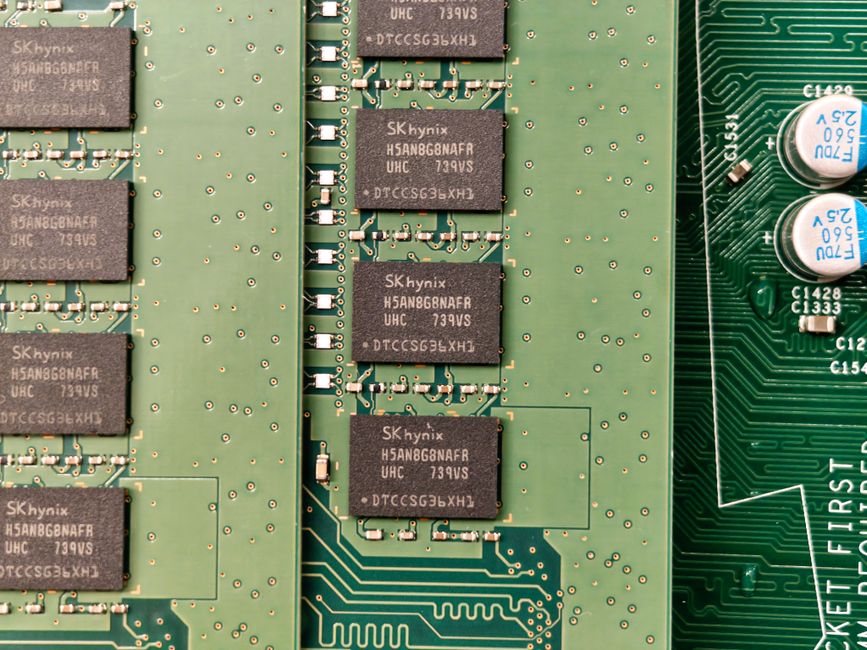
- SK Hynix is the world’s second-largest memory chipmaker and a dominant producer of high-bandwidth memory (HBM) crucial for AI training.
The $28 Billion Bet
On a day that will be remembered in capital markets history, SK Hynix opened its books to American investors in what became the largest foreign initial public offering ever. The $28 billion raise dwarfs previous records, eclipsing even the mega-listings from Chinese tech giants earlier in the decade. At $149 per ADR, the pricing reflected both strong demand and the premium the market is willing to pay for a pure-play AI memory maker.
The offering was massively oversubscribed. Reports indicate that total demand reached $200 billion—more than seven times the shares on offer. Such numbers are rare outside of the most hyped tech IPOs, and they cement SK Hynix’s position as a bellwether for the AI hardware boom.
Demand That Shook the Markets
The $200 billion demand figure is staggering when put in context. It represents roughly the entire market capitalization of many blue-chip companies. Institutional investors, sovereign wealth funds, and long-only asset managers lined up for allocation, with the largest accounts securing the lion’s share. The message from the market is clear: AI chip makers are the new must-own assets.
This demand has significant implications for capital allocation. As SK Hynix absorbs billions of dollars from global investors, those same dollars are being diverted from other asset classes. The shift is particularly pronounced in the cryptocurrency space, where speculative capital has been dominant in recent years.
Crypto vs. Semiconductors: A Changing of the Guard
The NASDAQ listing of SK Hynix is seen by many analysts as a turning point. For years, crypto assets attracted a disproportionate share of tech-savvy capital, driven by narratives of decentralized finance and digital scarcity. But with the AI revolution requiring tangible hardware—millions of GPUs and the high-bandwidth memory that connects them—the investment thesis is evolving.
SK Hynix’s ability to pull in $200 billion in demand suggests that institutional appetite for real-world, high-growth semiconductor plays is now stronger than ever. Some observers have dubbed this the “Great Rotation” from crypto to chips. While crypto markets remain substantial, the sheer scale of this offering indicates a rebalancing of priorities among large allocators.
Bain’s Exit and the AI Memory Gold Rush
The timing of SK Hynix’s US listing is interestingly aligned with Bain Capital’s decision to exit its stake in the company. Bain had been a major investor through its involvement in SK Hynix’s acquisition of Intel’s NAND business. Its exit, covered by Crypto Briefing, highlights the lucrative potential of AI-driven storage demand.
For SK Hynix, the Bain exit represents both an opportunity and a signal. On one hand, it clears the path for more public shareholders. On the other, it validates that early investors see peak value in the current AI boom cycle. The company now has virtually all its chips on the table as a pure public play on memory and storage.
The Bigger Picture: Reshaping Tech Investment Dynamics
The US listing of SK Hynix is more than a corporate event—it is a structural shift in how technology investment is globalized. By listing on the NASDAQ, SK Hynix gains better valuation multiples, access to deeper liquidity, and a broader investor base than it ever could on the KOSPI. This “valuation bridging” effect could inspire other Asian chipmakers to follow suit.
Moreover, the offering highlights the critical role of memory in the AI ecosystem. While much attention has been paid to GPU makers like NVIDIA, memory chips—especially HBM—are equally essential. SK Hynix is a leader in this niche, and its US listing gives investors direct exposure to that segment of the supply chain.
Looking Ahead
SK Hynix now faces the challenge of managing expectations. With $200 billion in demand, the stock is likely to trade at a premium, but sustaining that will require delivering on the AI memory roadmap. The company must navigate cyclical downturns in the semiconductor industry while scaling production to meet exploding demand from hyperscalers.
The NASDAQ listing also opens the door for potential M&A and strategic partnerships. With a stronger currency (the ADR) and a larger investor base, SK Hynix could pursue acquisitions or joint ventures to solidify its position in NAND and DRAM.
For the broader market, the message is unmistakable: AI is not just software—it is deeply physical. The capital flowing into SK Hynix proves that the next phase of tech investment will be defined by the hardware that powers intelligence. Crypto may have had its moment, but semiconductors are now in the spotlight.