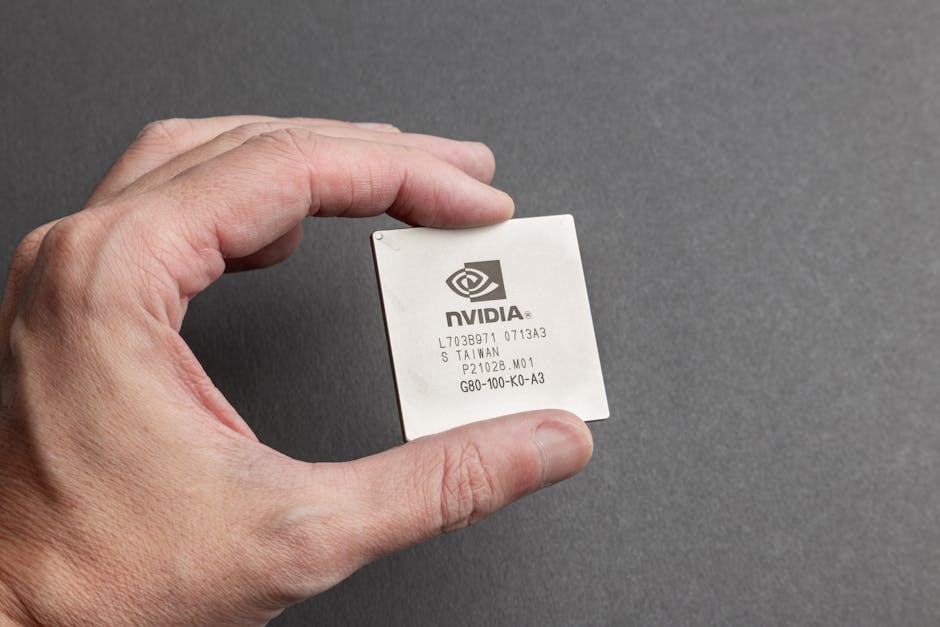
A probe in Taipei has ensnared three individuals accused of smuggling AI servers packed with Nvidia chips, exposing the tightening grip of export controls that are paradoxically boosting Huawei’s standing in China’s AI chip market.
What to know
- Taiwan is investigating three suspects for illegally exporting AI servers containing Nvidia chips, signaling a crackdown on sanctions evasion.
- US export restrictions have inadvertently strengthened Huawei’s dominance in China’s AI chip market, reshaping the competitive landscape.
- Nvidia CEO Jensen Huang publicly acknowledged that Huawei now leads the AI chip sector in China.
- The probe highlights intensifying US-China tech rivalry and the risk of further decoupling in semiconductor supply chains.
- The developments could unsettle crypto markets, which rely on AI-capable hardware for mining and trading infrastructure.
- AMD is also ramping up investments in Taiwan, further cementing the island’s role in AI hardware.
A Crackdown in Taipei
On May 21, 2026, Crypto Briefing reported that Taiwanese authorities are investigating three individuals for the illegal export of AI servers loaded with Nvidia chips. The probe marks a significant step in enforcing export controls designed to prevent sensitive technology from reaching China. While details of the case remain limited, the mere existence of the investigation signals that Taiwan—a critical hub for semiconductor manufacturing and AI hardware assembly—is tightening its oversight.
The investigation is a clear warning: Taiwan is no longer a passive link in the supply chain but an active enforcer of global tech sanctions.
The servers at the heart of the probe are believed to contain Nvidia’s most advanced AI accelerators, which are subject to US export restrictions when destined for Chinese entities. The case underscores how the battle for technological supremacy is playing out not just in boardrooms and policy halls, but also in customs inspections and criminal inquiries.
Huawei’s Quiet Rise
Perhaps the most striking development in the same news cycle is Nvidia CEO Jensen Huang’s admission that Huawei has overtaken Nvidia in China’s AI chip market. According to Crypto Briefing, Huang stated that US export restrictions have inadvertently bolstered Huawei’s position. What was intended to slow China’s technological progress has instead created a vacuum that Huawei was quick to fill.
Huawei has long been a powerhouse in telecommunications and consumer electronics, but its AI chip capabilities have taken a leap forward in the face of sanctions. The company now produces competitive alternatives to Nvidia’s offerings, winning over Chinese data centers and AI startups that can no longer easily access Western hardware.
The irony is sharp: the very policies meant to cripple China’s AI ambitions have accelerated the rise of a homegrown champion.
Huang’s concession is not just a talking point—it has real market implications. Nvidia’s revenue from China has shrunk, and its stock faces headwinds as investors digest the new competitive reality. Meanwhile, Huawei’s AI chip division is poised for further growth, especially if export controls remain in place or tighten.
The Nvidia Dilemma
Nvidia finds itself caught between geopolitical forces and market realities. The company has complied with US export restrictions, but in doing so, it has ceded ground to Huawei—a rival that now has a clear run in the world’s second-largest economy. Jensen Huang’s acknowledgment, reported by Crypto Briefing, suggests that Nvidia is not expecting a quick reversal of fortunes.
Yet Nvidia remains dominant in the global market outside China. Data centers in the US, Europe, and elsewhere still rely heavily on Nvidia’s AI chips. The company is investing in new architectures and diversifying its supply chain to reduce exposure to geopolitical shocks. But the loss of the Chinese market is a blow that will take years to offset.
Nvidia may have won the global AI chip war, but it is losing the Chinese front—and that front is large enough to reshape the battlefield.
The Taiwan investigation adds another layer of complexity. If Taiwan becomes more aggressive in intercepting illegal exports, Nvidia’s chips may find it even harder to reach Chinese customers through gray-market channels. This could further consolidate Huawei’s market share.
Risks for the Crypto Ecosystem
The AI server crackdown and Nvidia’s retreat from China may also rattle the crypto markets. Cryptocurrency mining operations—especially those focused on proof-of-work coins—depend on high-performance hardware, including Nvidia GPUs and AI accelerators used for specialized mining and trading infrastructure.
If global supply chains for AI chips are disrupted, mining farms could face delays in upgrading equipment, leading to network hash rate adjustments and potential price volatility. Moreover, the broader perception of a fracturing tech supply chain may drive risk-averse investors to reduce exposure to crypto assets.
Crypto markets, already skittish about regulatory clarity, now face a new vector of uncertainty from semiconductor geopolitics.
While the direct link between a chip export probe in Taiwan and Bitcoin price may seem tenuous, the interconnected nature of modern infrastructure means that any disruption to high-tech hardware availability can ripple through digital asset markets.
A Broader Tech War
The investigation and Huang’s remarks are symptoms of a deeper trend: the accelerating decoupling of the US and China tech ecosystems. Each new probe, export restriction, or corporate concession widens the rift. Taiwan’s role as a manufacturing linchpin makes it a hotspot for these tensions.
AMD’s reported investment in Taiwan—while not directly related to the probe—demonstrates that global tech giants are doubling down on Taiwanese manufacturing capacity. This may help secure supply chains but also risks drawing Taiwan deeper into the crossfire.
Crypto Briefing’s coverage suggests that the situation is fluid and that more enforcement actions are likely. As the US and China compete for AI dominance, every shipment of chips becomes a potential flashpoint.
Looking Ahead
The Taiwan investigation is still in its early stages, but its implications are already clear: the enforcement of chip export controls is becoming more stringent, and no one—from Nvidia to Huawei to crypto miners—will remain untouched. Jensen Huang’s concession signals a new era in which China’s domestic AI chip industry, led by Huawei, is a formidable competitor.
Moving forward, stakeholders should watch for additional indictments, changes in Nvidia’s China strategy, and shifts in crypto mining hardware availability. The US may also respond with new policies, either tightening controls further or seeking diplomatic solutions. In any case, the AI chip landscape is being redrawn in real time.
The only certainty is that the intersection of geopolitics, semiconductors, and crypto will continue to produce high-stakes developments.