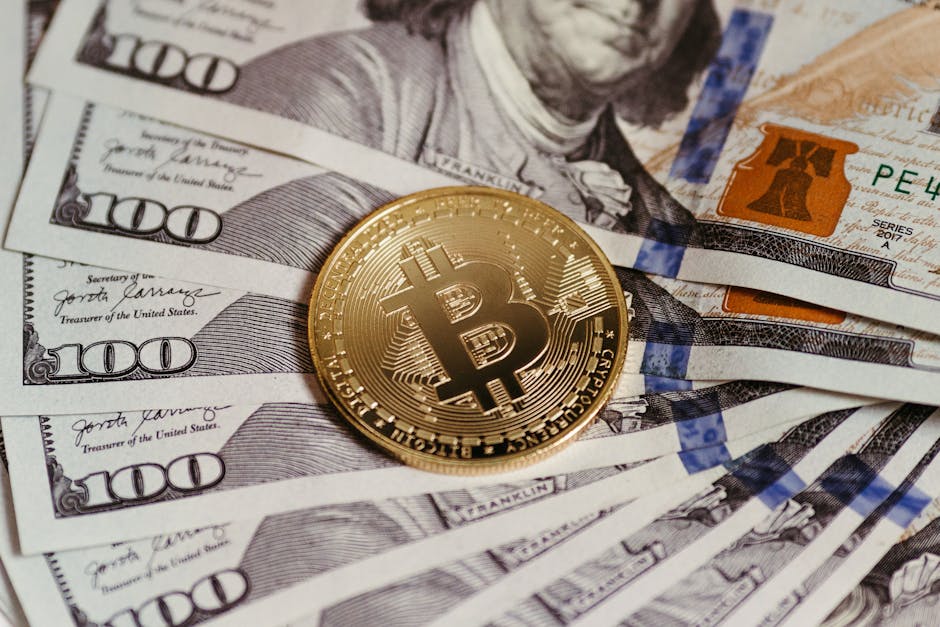
The Middle East is on fire, and crypto markets are feeling the heat. An IRGC strike on an Israeli air base, followed by US targeted strikes on Iran, has erased $80 billion from the crypto market cap, putting Bitcoin's safe-haven credentials under intense scrutiny.
What to know
- US forces conducted targeted strikes on Iran after an IRGC attack on an Israeli military base.
- The crypto market lost $80 billion in value, with Bitcoin falling sharply despite its “digital gold” narrative.
- President Trump warned of escalating attacks on Iran while simultaneously offering peace talks, creating a confusing dual-track policy.
- The IRGC strike is a direct escalation that risks drawing in multiple regional actors.
- Analysts are questioning whether Bitcoin can serve as a safe haven amid geopolitical shocks.
- Gold also declined as peace prospects faded, challenging both traditional and digital safe-haven assets.
- The events underscore the need for diversified investment strategies in a volatile geopolitical landscape.
The $80 Billion Wipeout: Crypto's Reality Check
On June 10, 2026, the crypto market saw one of its steepest one-day drops of the year. The trigger? A series of military actions in the Middle East. First, the Islamic Revolutionary Guard Corps (IRGC) struck an Israeli air base, an act that immediately sent shockwaves through global markets. Within hours, the US retaliated with targeted strikes on Iran.
For crypto investors, the reaction was brutal. The total market capitalization shed $80 billion in a single session. Bitcoin, often touted as a hedge against geopolitical uncertainty, fell in lockstep with risk assets. The narrative that Bitcoin is “digital gold” — a store of value immune to government action — took a direct hit.
“The post IRGC strikes Israeli air base as crypto markets absorb another geopolitical shock appeared first on Crypto Briefing.”
The market's behavior suggests that, at least in the short term, crypto remains a high-beta asset highly sensitive to global instability. When war breaks out, investors sell first and ask questions later.
Trump's Dual Strategy: Escalation and Diplomacy
President Trump's response to the crisis has been anything but predictable. In the same week, his administration both warned of “escalating attacks” and offered peace negotiations to Iran. This dual approach — stick and carrot — has injected even more uncertainty into already fragile markets.
On one hand, the threat of escalation raises the risk of a broader regional conflict, which would likely trigger further crypto sell-offs. On the other, the offer of talks hints at a potential de-escalation, which could restore calm. The market is left guessing which path Washington will follow.
The post “Trump warns of escalating attacks on Iran while offering peace talks, and crypto markets are watching” captures the anxious mood perfectly.
This policy whipsaw is particularly challenging for crypto traders, who must now factor in both military developments and diplomatic signals that can change by the hour.
Safe Haven No More? Bitcoin's Identity Crisis
Perhaps the most profound question raised by this week's events is whether Bitcoin can ever truly function as a safe haven. Proponents have long argued that its decentralized, non-sovereign nature makes it an ideal hedge against government failure, war, and inflation.
Yet in the face of the US–Iran conflict, Bitcoin behaved exactly like a risk asset — dropping sharply as fear spiked. Meanwhile, gold, the traditional safe haven, also fell. According to Crypto Briefing, “The fading peace prospects highlight the evolving dynamics of safe-haven assets, questioning gold's dominance and Bitcoin's emerging role.”
Both gold and Bitcoin failed to provide shelter during a clear geopolitical storm.
This dual failure suggests that the concept of a safe haven may be more nuanced than simple asset labels. In the early stages of a crisis, liquidity is king, and investors tend to move into cash (especially the US dollar) or short-term Treasuries. Crypto, despite its growing adoption, is still far from being a global reserve asset.
What This Means for Investors
The $80 billion washout is a stark reminder that crypto portfolios are not immune to geopolitical risk. For those who piled into Bitcoin as a geopolitical hedge, the past 48 hours have been a rude awakening.
Diversification is no longer just a suggestion — it's a necessity. Investors may need to consider a mix of assets that respond differently to various types of shocks. Stablecoins, while not a store of value, can provide liquidity during panic. Some analysts also point to assets like XRP or ETH as having different risk profiles, though they too are correlated in a broad sell-off.
Furthermore, the role of Crypto Briefing and similar outlets in covering these events highlights how mainstream geopolitical analysis is now intersecting with digital asset markets. The news cycle itself moves markets.
Looking Ahead
The path forward is highly uncertain. If the US and Iran find a diplomatic off-ramp, crypto markets could rebound sharply, perhaps restoring some faith in Bitcoin as a recovery hedge. But if the conflict deepens — if the IRGC strikes again or if US forces expand operations — the $80 billion loss could be just the beginning.
One thing is clear: the notion that crypto exists in a bubble separate from world events is dead. War, diplomacy, and presidential tweets now move crypto prices just as surely as they move stocks and bonds. Investors must adapt — or get burned.