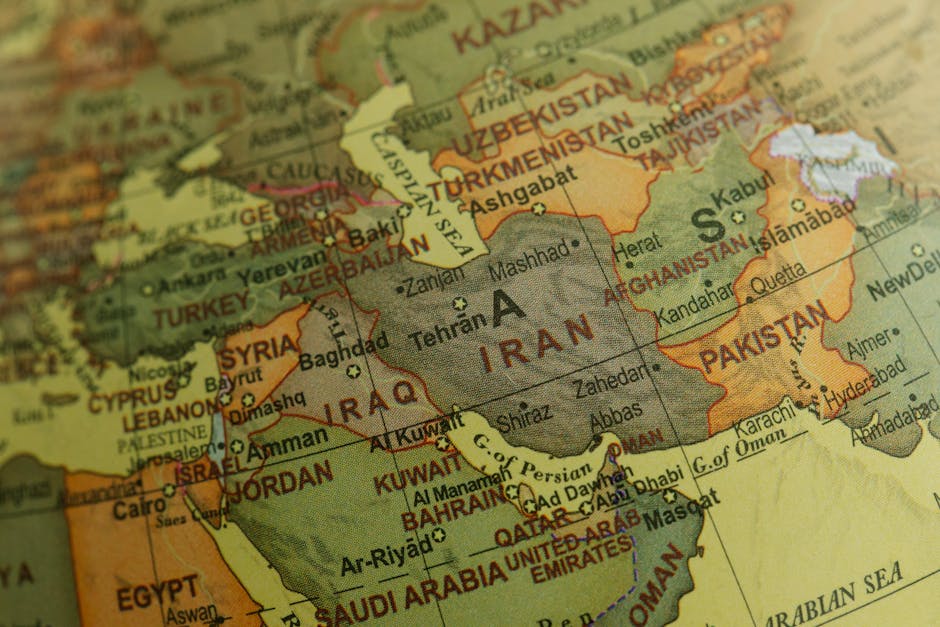
Israel's decision to keep troops deployed across three neighboring territories without a withdrawal timeline, coupled with Iran's refusal to meet US envoys in Doha, is reshaping the region's geopolitical landscape and rattling prediction markets.
What to know
- Israel announced it will maintain military presence in Lebanon, Syria, and Gaza indefinitely, raising the risk of a broader regional conflict.
- Israel conducted two preemptive strikes on Iran, further destabilizing already fragile peace prospects.
- Iran denied holding a meeting with the United States in Doha, underscoring a continued reliance on indirect diplomacy.
- Qatar is acting as the key mediator, enhancing regional stability but unable to bring Washington and Tehran to the same table.
- Prediction markets on Iran's regime stability have shifted, reflecting the increased uncertainty generated by these events.
The Indefinite Occupation
For years, Israel has justified its military operations in Lebanon, Syria, and Gaza as temporary responses to specific threats. That calculus has now changed. By declaring its presence indefinite, Israel is signaling that it views these deployments as a permanent feature of its national security posture.
This is a significant departure from the past. An open-ended military footprint across three territories — each with its own volatile dynamics — multiplies the points of friction with local militias, state actors, and international stakeholders. The risk of escalation is no longer hypothetical; it is embedded in the operational timeline.
The announcement came just hours after Israel conducted two preemptive strikes on Iran. The strikes themselves may destabilize the peace prospects that had been cautiously nurtured through months of backchannel diplomacy. When a preemptive strike becomes a policy tool, the very concept of deterrence is rewritten.
Preemptive Strikes and Iranian Calculations
The two preemptive strikes on Iran represent a sharp escalation. According to reports, the goal was to neutralize an imminent threat, but the broader effect has been to fracture the already brittle environment for negotiations. Iran has long used indirect talks as a way to manage tensions without conceding legitimacy to Israel's actions. Now, even those indirect channels are strained.
Iran's denial of a US meeting in Doha is telling. It suggests that Tehran is unwilling to be seen as negotiating under the shadow of military strikes. The regime's calculus likely involves weighing domestic pressure, regional credibility, and the need to respond without triggering a full-scale war.
Prediction markets that track the stability of Iran's government have already adjusted their odds. While the exact numbers are not publicly available, the trend points to heightened uncertainty among bettors and analysts who monitor these instruments as leading indicators of geopolitical risk.
Diplomacy Through Backchannels
The diplomatic picture is dominated by Qatar. Doha has hosted envoys from both Washington and Tehran, attempting to bridge the vast gap between the two sides. However, the lack of a direct US-Iran meeting in the Qatari capital underscores the depth of the impasse.
Qatar's mediation role is seen as a stabilizing factor, but it has limits. Indirect talks can convey messages and de-escalate minor flare-ups, but they rarely produce the kind of breakthroughs needed to resolve structural conflicts. Without a face-to-face meeting between US and Iranian officials, the prospect of a negotiated settlement remains distant.
The United States has not commented extensively on the absence of direct talks, but its reliance on Qatari intermediaries suggests a recognition that, for now, backchannel diplomacy is the only viable option.
The Domino Effects on Regional Stability
The combination of an indefinite Israeli military presence, preemptive strikes, and stalled US-Iran talks creates a feedback loop of instability. Lebanon, Syria, and Gaza — the territories where Israeli forces are now committed indefinitely — each have their own local dynamics that could ignite independently.
Hezbollah in Lebanon, various militias in Syria, and Hamas in Gaza all have reasons to respond to the altered security landscape. The indefinite presence gives these groups a permanent rallying point, while the preemptive strikes on Iran provide a narrative of aggression that can be used to mobilize support.
For Iran, the situation is equally fraught. The regime must decide whether to retaliate directly, through proxies, or to absorb the strikes and focus on diplomatic maneuvering. Each choice carries significant risks.
Looking Ahead
The Middle East is entering a period of multidimensional tension with few off-ramps. Israel shows no intent to reduce its military footprint, Iran appears unwilling to engage directly with the US, and Qatar's mediation, while valuable, cannot substitute for political will on both sides.
Prediction markets on Iran's regime stability will continue to be a barometer of the region's trajectory. If the current dynamics persist, the risk of a broader regional conflict will remain elevated. The only variable that could shift the equilibrium is a renewed diplomatic push — one that goes beyond backchannels and addresses the core issues driving the confrontation.
For now, the region waits. The strikes have been absorbed. The presence is indefinite. And the talks remain indirect.